
“Once somebody is helped by the Red Cross, they never forget it. They’ll never forget how the Red Cross came in and helped them, and it’s around the country, it’s around the world—the Red Cross is out there making a difference everywhere, every day.”
Julie Doyle
By Andrea Manokian, Red Cross Communications Volunteer
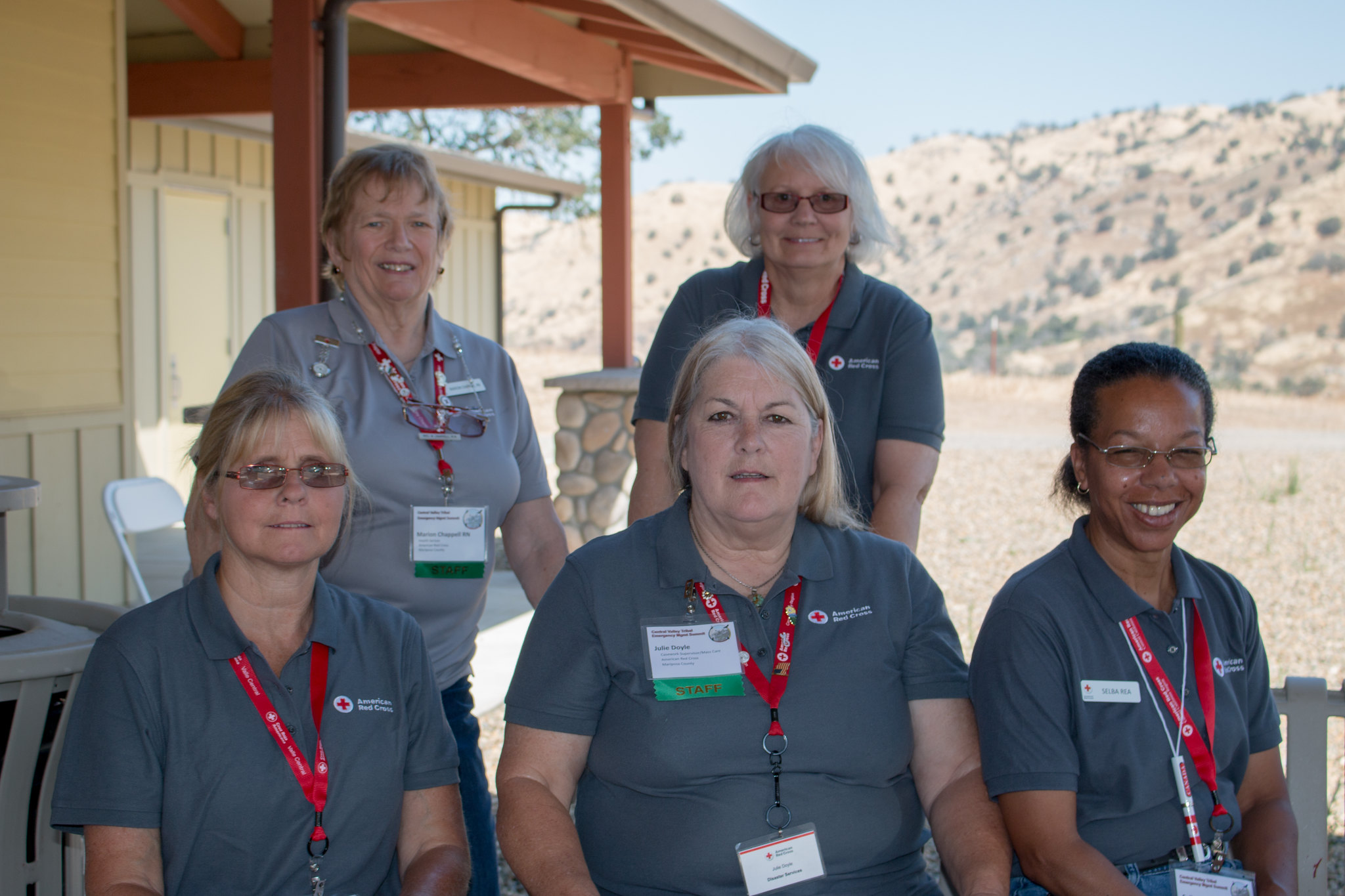
Named after the remarkable founder and first leader of the American Red Cross, the Clara Barton Leadership Award honors individuals who embody her humanitarian spirit and demonstrate an unwavering commitment to serving others. This year’s Clara Barton Leadership honoree for the Central California Region is Julie Doyle, a longtime Red Cross volunteer and a Regional Recovery Lead based in Mariposa County.
When I speak with Julie, she’s still recovering from a recent illness—I can hear in her voice that she hasn’t fully bounced back. But from what I’ve come to learn about Julie, this doesn’t surprise me. Her dedication to the Red Cross and her team is unwavering. She always shows up, always follows through, and has earned a reputation for being extremely reliable. Even when she’s recovering, she’s still making time for the Red Cross. I’m quick to congratulate her on her recent award, to which she responds modestly, “I do what I do because I love it. I don’t do it for an award. I don’t do it for the accolades.”
Julie joined the Red Cross in 2013, after her children became teenagers and “fled the coop” as she puts it. With more time on her hands and a growing desire to give back, she found herself ready to make a difference. The devastating impact of Hurricane Katrina had left a lasting impression on her, and it became the catalyst for her involvement with the Red Cross. She recalls her first experience with the organization, driving up to Groveland to help open a shelter. “I met lifelong friends that day,” she says. “I can’t even count the number of shelters we’ve done since then,” she adds.

Over time, Julie became involved with the Disaster Action Team (DAT), which eventually led her to a role in recovery. She served as a Deputy Regional Recovery Program Lead for about six years, at one point overseeing nine counties at once. Today, she serves as a Regional Lead, mentoring other recovery supervisors and managing her casework team. “I direct traffic,” she says with a slight chuckle. Once again displaying her humility, as anyone who knows Julie knows, she does far more. “We get a call, the DAT responders go out, and then I assign caseworkers to follow up with those impacted,” she explains. “We usually try to help people within 30 days,” she adds.
Julie ensures that each person receives the specific help and attention they require in the aftermath of a disaster. “I supervise the casework team. The caseworkers reach out to the client and ask them what it is that they need. It can be food, clothes, money—it can be so many different things. Every fire is different; every client’s needs are different, so there aren’t any two that are the same,” she says as she reflects on her long tenure with the Red Cross.
I ask Julie if she remembers a particular Red Cross story that has resonated with her over the years. She lets out a big exhale as she exclaims, “There are hundreds!” She has difficulty settling on just one. “People are so resilient. If [an emergency] happened to me, I would probably just go and hide, but people are so resilient, and it just amazes me every day to hear their stories. It’s really rewarding,” she says.
For Julie, these countless stories are what truly matter: hearing the positive experiences of those who rely on the support and care of the Red Cross. “I’ve deployed hundreds of times virtually, to Texas and Louisiana—all over the place,” she says. Julie recounts her recent experience with the tragic wildfires that spread through Los Angeles County, leaving thousands in their wake. She took part in the Red Cross’ Operation Compassion—a task force in charge of contacting all Red Cross employees and volunteers that were affected by the fires and had signed up for recovery services. “Every single one of them was just the nicest person you’d ever want to talk to and meet,” she says.
Julie recalls a young couple who had lost everything during the Los Angeles fires. “I was able to help them get an apartment and set up a U-Haul to move the stuff they had in storage,” she says. This highlights just one of the many ways the Red Cross provides aid in emergency situations. Julie continues, “They were just so thankful and sweet and kind, and they were Red Cross volunteers on top of that.”

Julie has the ability to connect with those she helps; it comes naturally to her. She remembers yet another connection she made with an impacted individual during the Los Angeles fires—a young man who to this day will call her for help. The last time he called Julie he was near Sepulveda Boulevard and needed to get to Anaheim. (A roughly 40-minute drive for those unfamiliar with Los Angeles County.) I asked Julie how she responded and it came as no surprise when she told me that she immediately jumped into action. “Of course I got onto Google and found him a bus that went from one point to another,” she says.
Speaking about her virtual deployments, Julie says, “It’s 12-hour days. With casework and recovery, you’re given a list of anywhere from 50 to 100 numbers, and you call, call, call.” Often, Julie and her team are one of the first people to reach out to impacted individuals after a natural disaster has occurred. When asked how she navigates these calls, she simply says, “It just comes naturally.” Julie has been evacuated from her home five times, an experience that deepens her empathy and understanding of what others are going through.
When asked how the Red Cross is making a difference in people’s lives, she says, “I hear it every day, even talking to DAT responders and the feedback that they’re getting from the people they’re out there helping. We’re making amazing differences.” She continues to say a statement I find especially endearing: “Once somebody is helped by the Red Cross, they never forget it. They’ll never forget how the Red Cross came in and helped them, and it’s around the country, it’s around the world—the Red Cross is out there making a difference everywhere, every day.”
Multiple times throughout our call, Julie credits the Red Cross for giving her life a sense of purpose and fulfillment. She often encourages her friends and family to get involved with the organization. “My daughter is a nurse at Children’s Hospital and she’s a huge blood donor. She would attend shelters as an event-based volunteer; she’s helped a lot,” Julie says. “I’ve dragged everybody I can think of into [the Red Cross],” she says as she laughs. Julie’s husband and grandson were once Red Cross volunteers too.

Speaking with Julie, it becomes undeniably clear that she does what she does for one reason and one reason only, because she loves to do it. Helping those in critical need, connecting with impacted individuals on a deeper level and becoming a reliable resource her casework team can depend on—these are things that are instinctual for Julie. Her humble nature is also evident. When interviewed for receiving this year’s Clara Barton Award, Julie introduced herself first and foremost as a homemaker with eight grandchildren, soon to be nine this July. Taking care of people is Julie’s thing, and she hopes to inspire others to discover their thing.
The Red Cross has something for everyone—volunteer opportunities span recovery, recruitment, record keeping and more. Make a meaningful impact in your community by finding a volunteer opportunity that aligns with your skills and passions.
 Red Cross Central California Blog