
By Anna Kumor, Communications Volunteer
Sharon Shou, has served as an American Red Cross Disaster Mental Health Volunteer and has deployed to disasters six times, including two this year. Sharon played a role in the Cultural Awareness pre-deployment training of disaster responders heading to Guam after Typhoon Mawar struck this summer and also deployed to Maui. On top of that, she also serves as a member of the Latino Engagement Team working to connect underserved communities to the Red Cross before, during and after disasters.
Sharon first served on Hawaii for the Kilauea volcano disaster in 2018, and most recently returned after the Maui wildfires. It was there she first became interested in improving the culturally competent care of Red Cross volunteers. As a licensed mental health professional (retired), Sharon is keenly aware of the impact that helpers have on those that they aim to help.
“It involves understanding what cultural safety and wellbeing look like for people in traditional cultures…being able to ‘talk story,” the way people in traditional cultures talk story to develop relationships and trust,” says Sharon. Talk Story is an informal way of chatting with people that is based on trust and authenticity. It is not meant to elicit information or to provide treatment, but to connect on a human level. One way Sharon employs Talk Story during her deployments is to share meals with the shelter service recipients. “I go up to them and I say, ‘Can I join you for lunch?’ They always say yes.”
Another part of Talk Story is to keep in mind that as Red Cross volunteers, we are guests in another culture which has different ways of relating and communicating. “Most traditional cultures communicate indirectly,” says Sharon, which means that body language and relationship to spiritual traditions play a larger part in the conversation. Even standing over someone’s cot can unintentionally create discomfort. “Better to get to eye level. And if your knees are bad, get a chair.”
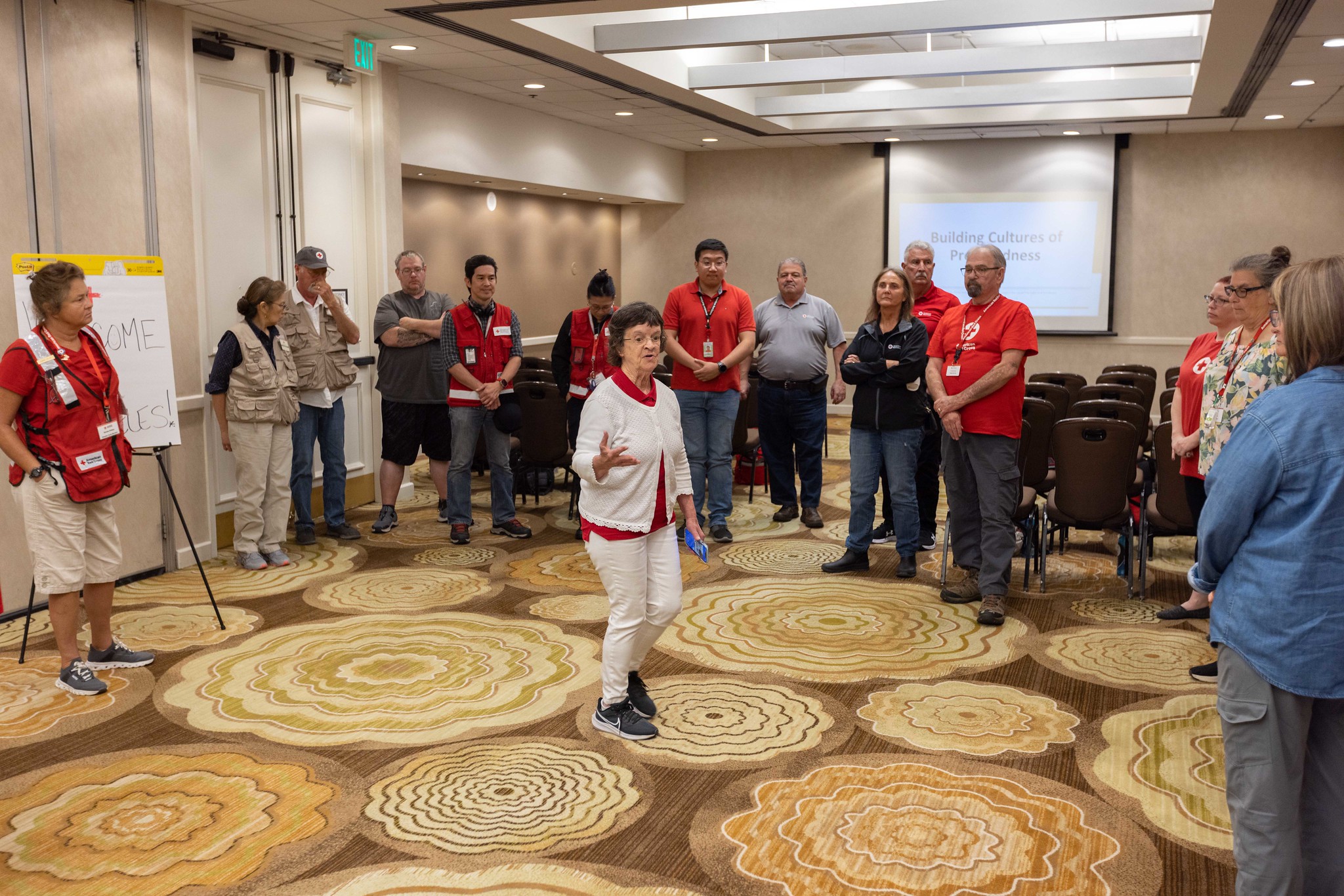
Cultural competency and the ability to adapt are necessary skills for Red Cross volunteers because, “if we do not understand how to adapt our humanitarian interventions to the context of the culture of the individual, family, and community; we are not serving equitably. It’s just not enough to say we should be culturally sensitive, and we should connect with cultural brokers on the ground.”
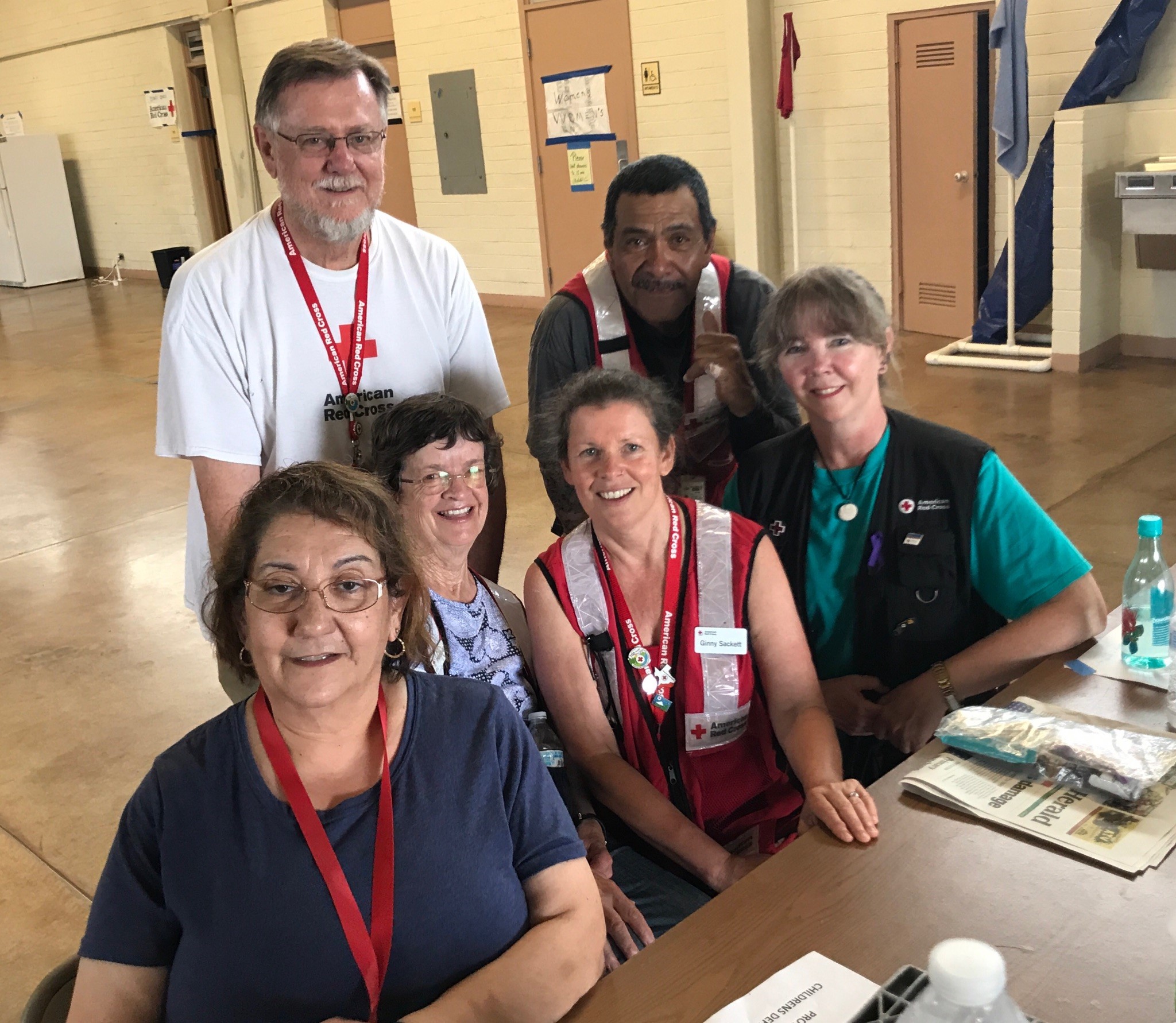
Sharon has a dream of how to improve the culturally competent care of Red Crossers: Train the trainers to give “just in time” cultural sensitivity training for deployments similar to what she provided for the Guam response and give more extensive cultural skills training that provides continuing education units to licensed professionals serving in Red Cross Individual Care Services. A large part of being able to code switch from mainstream American Culture to Traditional Cultures is to be mindful of how your efforts are being received. “In my experience given the diversity of people from different cultures in the communities that we serve, it can be difficult — even with cultural brokers’ assistance — to be culturally sensitive toward all the survivors and evacuees from the diverse cultures that we encounter.”
“I’m passionate about this topic, because I have personally seen and heard the difference it can make in providing equitable services no matter where we are in the United States and its territories.”
On what inspires her, Sharon says, “As a Disaster Mental Health Volunteer, I am asked to look out for the mental wellbeing of not just survivors, but also Red Crossers. I always meet some amazing Red Crossers and I always come back having learned from people I meet. I am so inspired by other Red Crossers and by what they show up to do for our shared Red Cross mission to prevent and alleviate human suffering in the face of emergencies.”
To learn more about what Disaster Mental Health Services include and how Red Cross volunteers help, visit here.
 Red Cross Central California Blog